
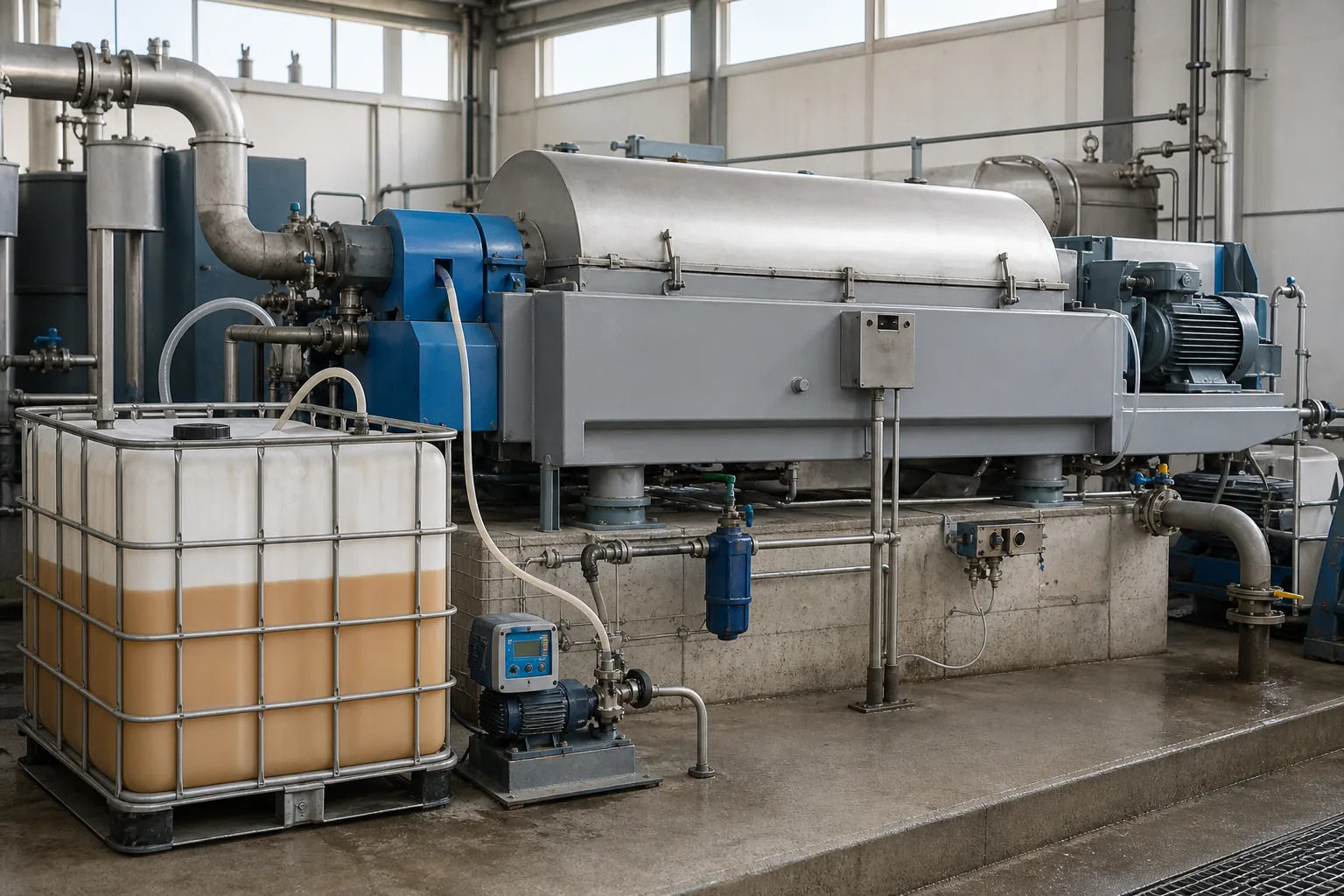
Set the purchase boundary
For a belt press, the useful emulsion grade supports drainage and solids capture without creating unacceptable belt or wash-water behavior. The buying decision should follow the whole operating cycle rather than a single floc-size observation.
Identify the proposed commercial grade and the operating condition that must be demonstrated before an order is released.
Define the press duty
Record sludge blend, solids, conditioning point, belt speed, loading and current wash-water arrangement. Establish a reproducible incumbent result before candidate dosing. The cationic emulsion profile provides a screening direction, not a guarantee for every sludge.
Agree which filtrate and cake measurements will decide acceptance. Include practical belt release and cake handling observations with the numerical measurements.
Screen drainage before machine time
Use a repeatable bench comparison with equal active dose and preparation conditions to narrow candidates. Retain weak and excessive dose points so the plant trial begins with a defensible range. Check that the selected emulsion can be activated by the installed skid.
Translate the bench result cautiously: drainage under a small laboratory test does not reproduce every belt contact, pressure stage or operator adjustment.
Evaluate the stable machine window
Record filtrate quality, loading, drainage, release, cake and wash demand after stabilization. Identify changes in belt speed or feed instead of attributing every output change to polymer. Link measured neat consumption to the dry-solids dose basis.
Where a candidate works over a narrow dose range, assess whether routine control can maintain that window before committing to recurring supply.
Check the difficult case
A very large floc may drain quickly at first yet release fines or produce difficult belt cleaning in continued operation. Keep the observed operating duration and all relevant endpoints visible rather than accepting the product from the first attractive drainage sample.
Keep unresolved limitations in the qualification record instead of presenting a proposed benefit as an established operating result.
Record the acceptance evidence
| Check | Evidence | Decision |
|---|---|---|
| Conditioning | Actual sludge and activation | Screen reflects site duty |
| Press | Drainage, filtrate, release and cake | Multiple endpoints accepted |
| Control | Measured useful dose range | Routine operation feasible |
Retain the sample code, lot, preparation method and measured feed with the purchasing decision. Compare subsequent deliveries with that record, using the same test conditions wherever practicable.
Request a scoped offer
Send the press configuration, sludge analysis, operating loading, current polymer and dose, wash arrangement and target measurements. Specify whether a short sample screen or a scheduled machine trial is required for the next purchasing decision.
Send the evidence through the sample and quotation form. Review packaging and lot controls with Gongyi Xinqi Polymer Co., Ltd., and confirm grade availability and order terms before committing.