
Start with sludge demand, not liquid appearance
Cationic emulsion grades are commonly screened for biological and organic sludge because positively charged sites can adsorb to negatively charged solids. Charge density is only one variable; molecular architecture, active basis and mechanical shear also affect drainage and capture.
Record sludge source, blend, total solids, pH, conductivity, temperature and upstream chemicals before comparing grades. A product selected on one favorable sludge sample may not remain stable when the feed blend or storage time changes.
Activate before judging chemistry
An inverse emulsion is not a ready-to-dose polymer solution. Water must contact and disperse the emulsion correctly so polymer particles release into the continuous water phase. Poor inversion can imitate an under-strength grade and leave deposits in pumps or strainers.
Keep water flow, neat emulsion flow, contact shear, aging and final dilution consistent across the candidate screen. Inspect the diluted solution and verify actual pump delivery before changing the charge profile.
Approve on the dewatering machine
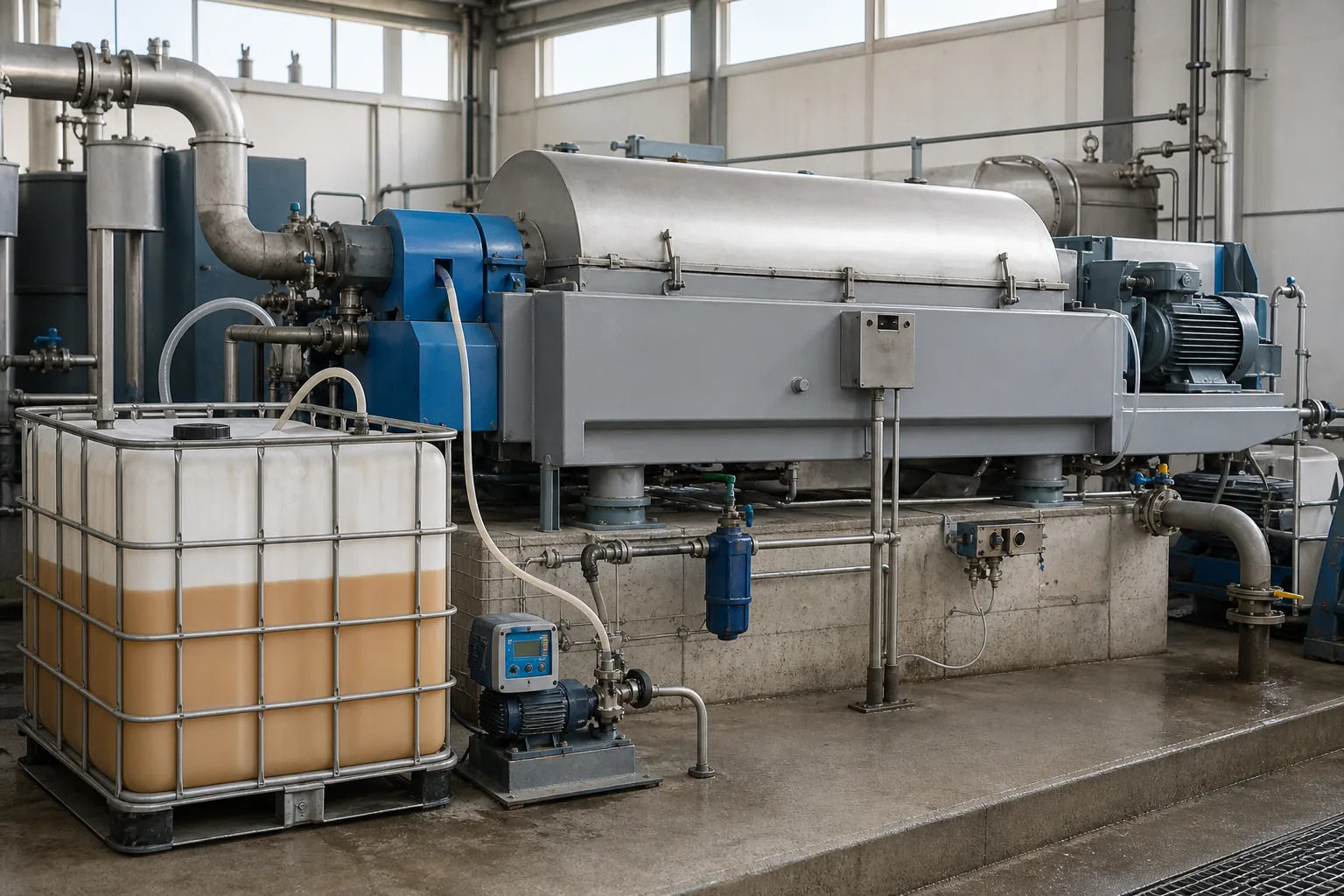
For a centrifuge, compare centrate suspended solids, cake solids, torque, throughput and neat-product use. For a belt press, compare gravity drainage, filtrate quality, belt release, wash water and cake handling.
Normalize consumption to active polymer per dry solids. Preserve the approved sample code, inversion settings and machine conditions so the quotation remains connected to the demonstrated operating window.