
Name the dose basis
Clarification may use active polymer per treated volume or per mass of suspended solids. Sludge dewatering is commonly compared per dry solids processed. Choose a stable basis that matches the process decision and use it for every candidate.
Always distinguish kilograms of commercial emulsion from kilograms of active polymer.
Measure neat emulsion delivery
Calibrate the pump with a timed mass or volume and record product density if converting between them. Controller percentage and nominal pump capacity are not measurements. Check calibration at the actual discharge pressure and product temperature.
Reconcile measured delivery with IBC or drum consumption across a representative period.
Apply the active fraction
Multiply neat emulsion mass flow by the supplier-declared active fraction on the stated basis. Keep the supporting product document and method beside the calculation because similarly described emulsions can have different formulation bases.
Do not infer active content from appearance or generic market ranges.
Calculate dry-solids load
For sludge, multiply wet feed flow by measured solids concentration and handle density and unit conversions explicitly. For slurry, use a representative solids measurement rather than a historical design value.
A changing feed-solids concentration can make a stable neat pump appear to overfeed or underfeed polymer.
Build a bracketed trial
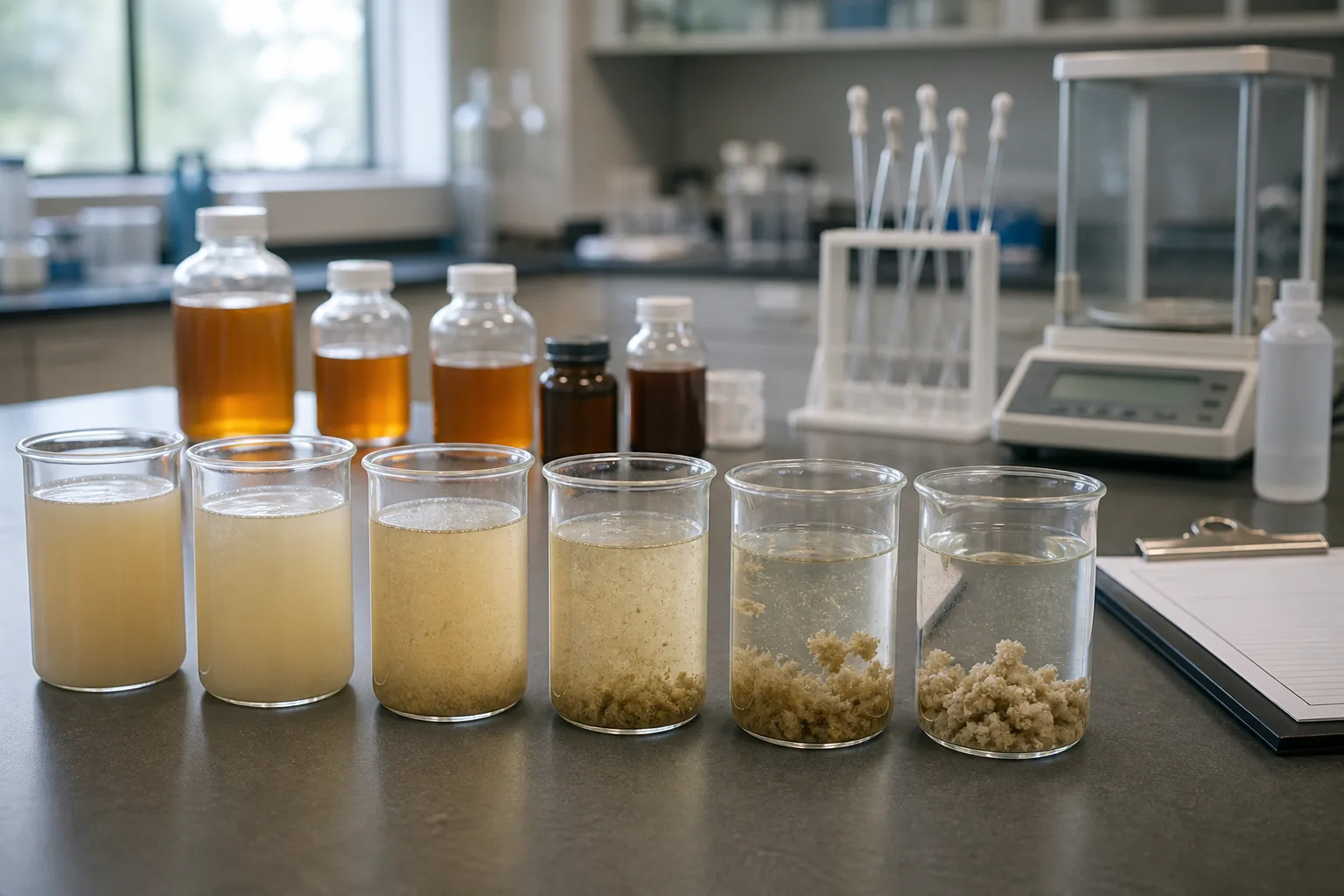
Test below, near and above the current active dose while holding activation and equipment settings steady. Allow for process residence before sampling the outlet. Retain underdose and overdose symptoms with quantitative endpoints.
If the feed changes, pause the comparison or normalize results using the measured load.
Convert to commercial demand
After confirming an active operating window, calculate neat product per hour, day and month using realistic duty. Add package residuals, transfer loss and contingency separately rather than hiding them in the technical dose.
Use the result to select IBC, drum or bulk delivery and to check storage turnover.
Audit the calculation
Have another operator reproduce the units from raw measurements. Preserve pump calibration, product code, active basis, feed data, machine settings and sample times.
A traceable dose record prevents a purchasing comparison from being distorted by incompatible assumptions.
Build the calculation from raw measurements
For dewatering, multiply measured wet sludge flow by solids fraction to obtain dry-solids mass per hour. Multiply calibrated neat-emulsion mass flow by declared active fraction to obtain active polymer per hour. Divide active polymer by dry solids and keep units visible.
For clarification, substitute the chosen volume or solids-loading basis. Expose density, time and unit assumptions instead of reporting one opaque final number.
Use uncertainty in the decision
Feed flow, solids testing, pump calibration and active fraction each carry uncertainty. Repeat measurements and report a range when inputs vary. A small apparent difference between candidates may be smaller than the combined measurement error.
Approve repeatable improvement across a practical active-dose window. A result that depends on an exact setpoint the plant cannot maintain is not robust.