
Compare chemistry before physical form
Powder and emulsion can both carry different ionic and molecular profiles. First establish which chemistry gives the required separation, then compare whether each physical form can be prepared reliably at the site.
A poor powder make-down system does not prove that emulsion chemistry is superior, and a poor inversion skid does not prove that powder is inherently stronger.
Normalize active polymer
Commercial emulsion contains a lower fraction of active polymer than dry product. Divide delivered product cost by the verified active fraction, then multiply by the active dose required for the same treatment endpoint.
Retain units and supplier test methods. Do not compare neat kilograms per day without accounting for active basis and feed loading.
Value equipment and labor honestly
Powder requires controlled wetting, dissolution and storage protection. Emulsion requires tote or drum handling, metering and effective inversion. Compare maintenance, calibration, cleaning, operator time and space for both complete systems.
Include downtime caused by fisheyes, deposits, blocked injectors or unstable solution—not just the chemical invoice.
Review response and changeover
An emulsion system may reach usable solution more quickly and support automated product changes. A powder system may suit stable high-volume consumption where make-down time and space are available.
Run the form comparison at representative production conditions. Short response has value only if the activated solution remains consistent.
Include storage and freight
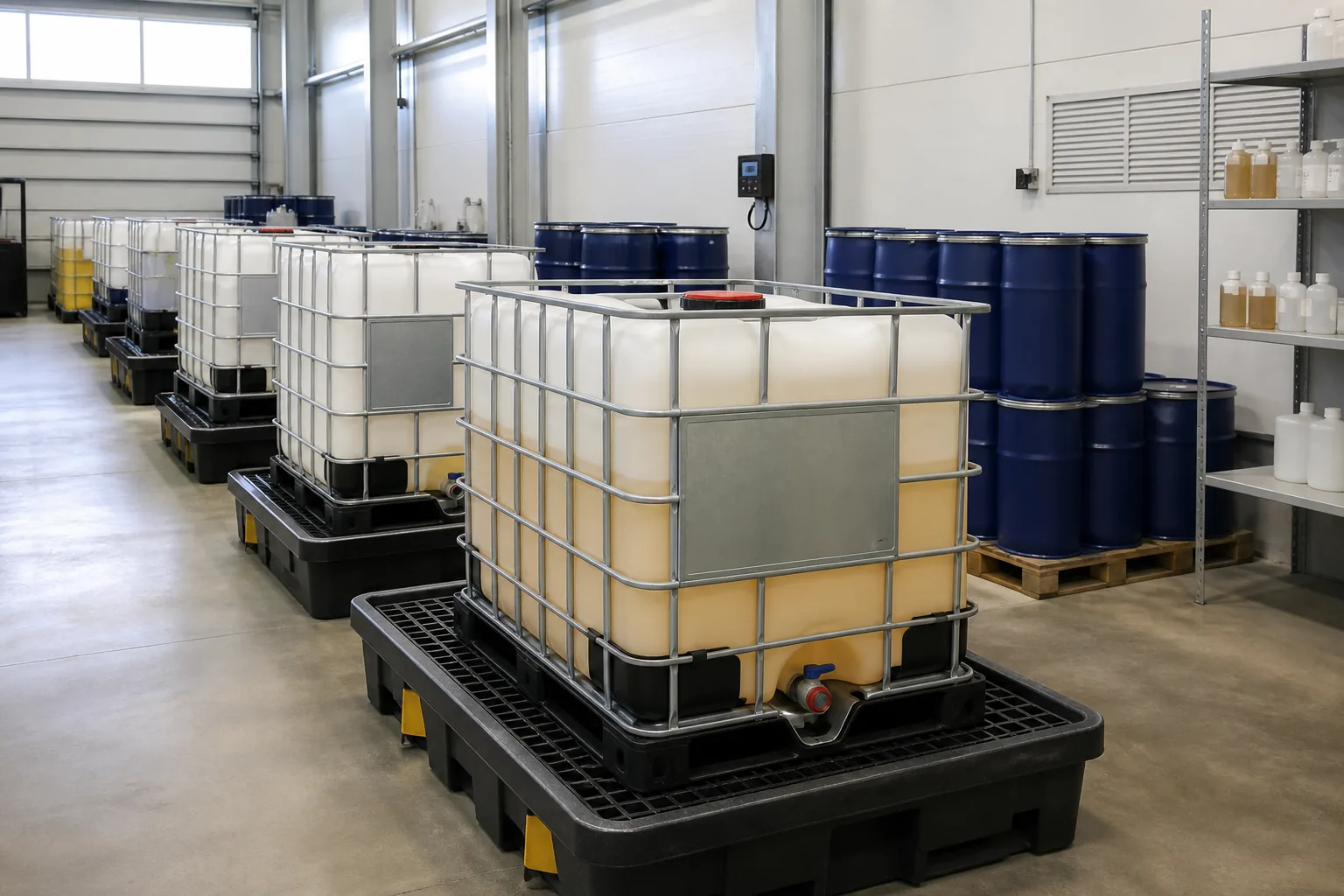
Powder usually moves more active polymer per unit shipping weight and needs dry storage. Emulsion moves its complete liquid formulation and can be sensitive to temperature or prolonged storage.
Use supplier-specific storage guidance, realistic inventory turnover, package size, freight route and secondary containment in the cost model.
Protect process equivalence
Compare the same sludge or water, separator, active dose curve, contact sequence and endpoints. Keep current product as a control and repeat the leading option after feed drift.
A technically valid conclusion states the conditions under which each form was tested rather than declaring one form universally better.
Prepare the purchase decision
List product code, active basis, package, inversion or make-down requirements, monthly active demand, destination, documents and acceptance trial. Separate demonstrated facts from expected operating benefits.
The winning option is the lowest reliable delivered treatment cost within the plant's control and logistics constraints.
Calculate a realistic changeover case
List tanks, pumps, utilities, containment, operator tasks and maintenance for the current form. For the proposed form, include equipment, installation, commissioning, training, spare parts and transition inventory. Spread capital across a stated evaluation period instead of hiding it in chemical price.
Keep uncertain benefits as scenarios. Faster startup or reduced labor should be measured during the plant trial before becoming a guaranteed saving.
Check waste and package handling
Powder programs generate bags or bulk-container handling; emulsion programs use drums, IBCs or bulk delivery and leave a residual liquid heel. Compare package return, rinsing restrictions, disposal, secondary containment and transfer loss under local requirements.
The preferred form should reduce reliable treatment cost without shifting an unmeasured burden into receiving, housekeeping or waste management.