
Set the purchase boundary
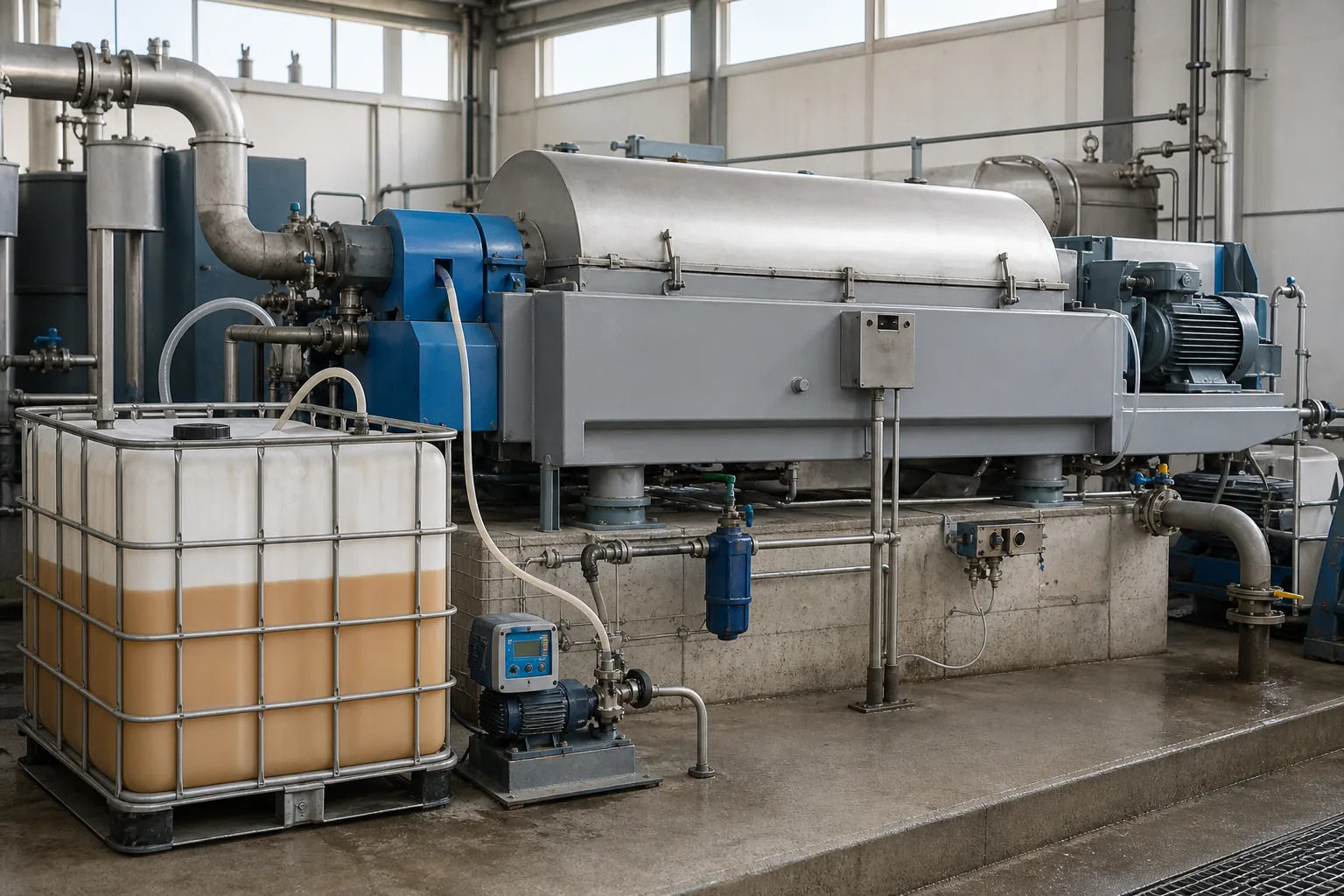
A centrifuge purchase trial should establish whether the proposed cationic emulsion meets the required capture and cake result at practical throughput. An impressive floc in a jar is useful screening evidence, but the machine applies a different contact and shear history.
Identify the proposed commercial grade and the operating condition that must be demonstrated before an order is released.
Preserve a comparable sludge baseline
Record sludge origin, blend, feed solids, temperature and upstream treatment before changing polymer. Establish centrate quality, cake solids, throughput and machine settings with the incumbent. The dewatering application guide sets the broader process boundary.
Where the blend changes during the trial, separate the data windows rather than averaging unlike conditions into an apparent candidate advantage.
Hold preparation and settings accountable
Verify neat pump delivery and activation before ranking grades. Introduce the candidate with a documented sequence, allow stabilization and bracket active dose while holding unrelated mechanical settings steady. If the machine must be retuned, record that as a separate comparison.
Track centrate solids alongside cake and throughput; a dry-looking cake alone does not establish acceptable capture or a lower total treatment burden.
Translate the result into the order
Relate accepted active dose to commercial liquid use, package turnover and replenishment. Link the sample code and inversion settings to the proposed production supply. Use the dose calculation to keep dry-solids and neat-product units explicit.
Approve the operating window rather than one isolated setpoint. Include recovery and stop conditions where poor centrate quality could create a downstream load.
Check the difficult case
A candidate can appear to reduce polymer use when the sludge feed rate drops at the same time. Reconcile dry-solids throughput and outlet capture before accepting the saving; otherwise the quoted product requirement may be based on a reduced processing duty.
Keep unresolved limitations in the qualification record instead of presenting a proposed benefit as an established operating result.
Record the acceptance evidence
| Check | Evidence | Decision |
|---|---|---|
| Feed | Blend and dry-solids loading | Baseline remains comparable |
| Machine | Cake, centrate and throughput | No single-output approval |
| Supply | Code and accepted active dose | Order reflects machine evidence |
Retain the sample code, lot, preparation method and measured feed with the purchasing decision. Compare subsequent deliveries with that record, using the same test conditions wherever practicable.
Request a scoped offer
Send sludge data, centrifuge type, current grade, calibrated dose, baseline outputs and trial availability. State the minimum acceptable capture and throughput together with the target cake condition before asking for a recommended sample set.
Send the evidence through the sample and quotation form. Review packaging and lot controls with Gongyi Xinqi Polymer Co., Ltd., and confirm grade availability and order terms before committing.