
Set the purchase boundary
Reusing water for polymer activation can be attractive where freshwater is constrained, but suitability must be demonstrated for the actual emulsion and water. A successful application in process slurry does not automatically prove that the same water is suitable for making down the neat product.
Identify the proposed commercial grade and the operating condition that must be demonstrated before an order is released.
Characterize the proposed water
Record suspended solids, conductivity, hardness where relevant, pH, temperature and upstream chemical carryover. Identify how these vary during normal operation and upset conditions. The inversion guide distinguishes preparation-water effects from the later feed interaction.
Use samples representative of the proposed supply point, not a clearer stream collected elsewhere. Preserve a known suitable water control for the comparison.
Test activation and equipment together
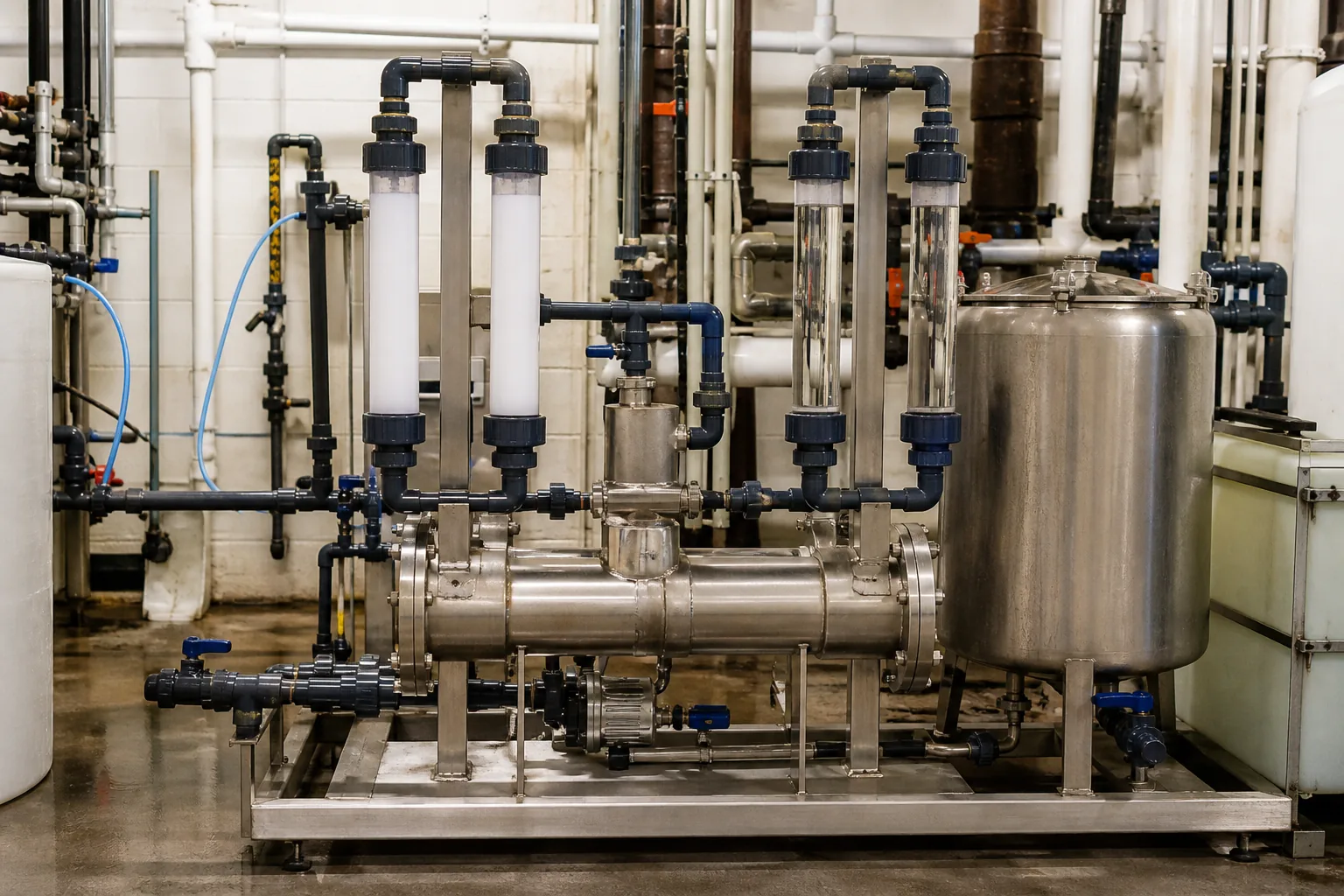
Prepare the candidate using supplier-reviewed conditions, then compare solution uniformity and application response. Inspect the proposed water filter, injector and contact device for compatibility with the water solids load. Record any required pretreatment as part of the purchase boundary.
Do not describe a water-saving proposal as an approved operating change when the site has not demonstrated stable preparation or acceptable equipment maintenance demand.
Define variability controls
Set a method for recognizing a changed water source or quality before polymer performance drifts. Decide what triggers supplier review, a repeat trial or a switch to the qualified backup water. Include the availability and cost of that fallback in the operational comparison.
A candidate that passes only under unusually clean recycle conditions has a limited qualification, which should remain visible in the order and handover record.
Check the difficult case
If recycled water produces similar initial floc but increasing deposits over a longer run, a short beaker comparison is incomplete. Review preparation and equipment evidence before promising the same polymer consumption or maintenance interval as the freshwater baseline.
Keep unresolved limitations in the qualification record instead of presenting a proposed benefit as an established operating result.
Record the acceptance evidence
| Check | Evidence | Decision |
|---|---|---|
| Water | Source and variability record | Trial represents actual supply |
| Equipment | Contact and fouling inspection | Pretreatment scope explicit |
| Fallback | Defined trigger and alternate water | Continuity remains practical |
Retain the sample code, lot, preparation method and measured feed with the purchasing decision. Compare subsequent deliveries with that record, using the same test conditions wherever practicable.
Request a scoped offer
Provide representative water results, current activation method, proposed reuse point, filtration and backup-water arrangement. Request a scoped sample trial that evaluates the water change separately from any simultaneous grade change.
Send the evidence through the sample and quotation form. Review packaging and lot controls with Gongyi Xinqi Polymer Co., Ltd., and confirm grade availability and order terms before committing.