
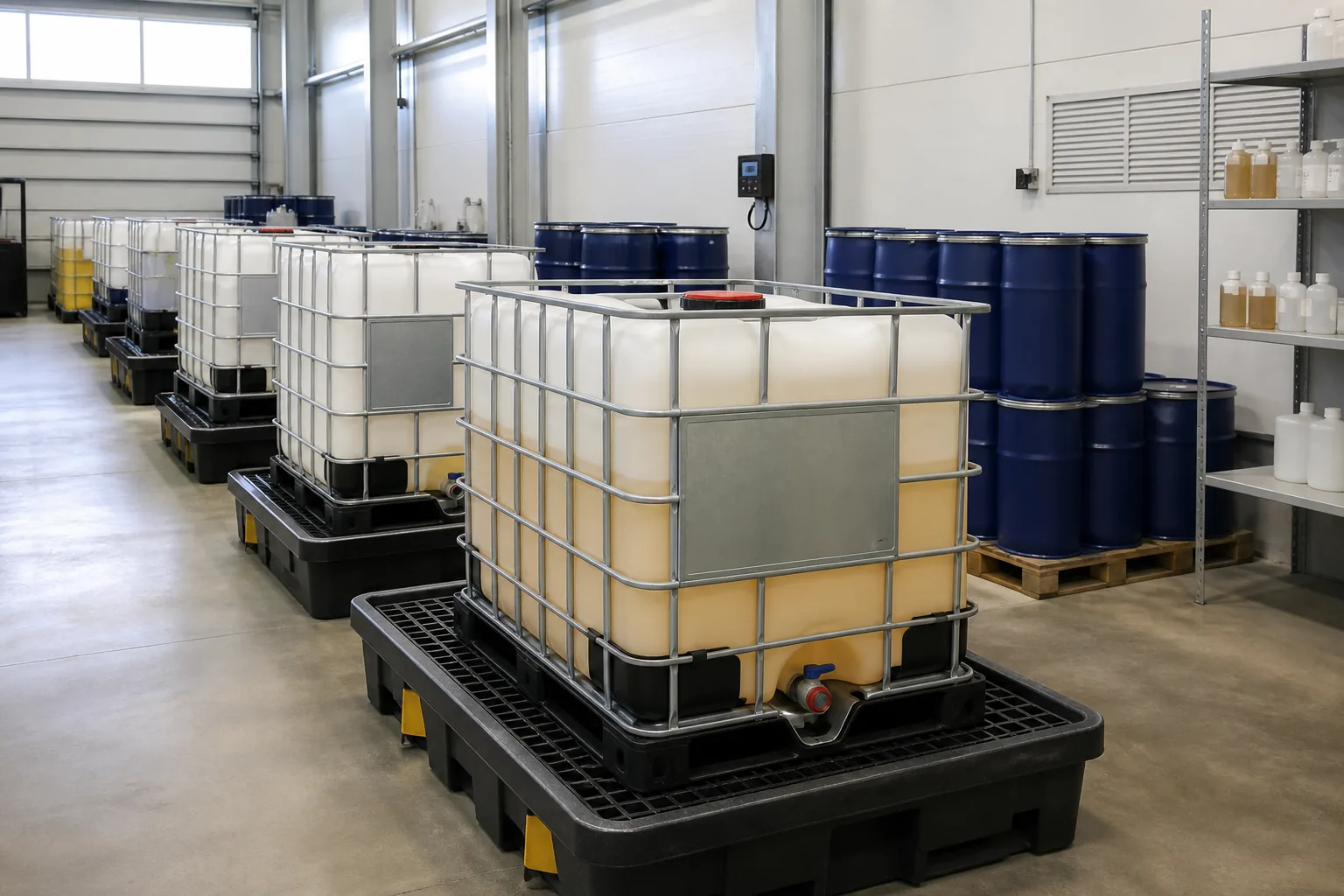
Use grade-specific storage limits
Emulsion stability depends on formulation and storage history. Follow the product SDS and technical guidance for temperature, shelf period and handling. Do not apply a generic freeze point or shelf-life claim to every grade.
Record receipt date, lot, package condition and storage location so later process changes can be compared with actual inventory history.
Protect from temperature extremes
Review the full route from freight terminal to indoor storage and day tank. Direct sun, hot enclosures and freezing exposure can differ from the warehouse temperature reading.
If a package has experienced an excursion or visible separation, isolate it and obtain supplier guidance before plant dosing; uncontrolled agitation is not an automatic repair.
Provide secondary containment
Place drums and IBCs in compatible containment and keep valves protected from impact. Maintain clear access for inspection and transfer. Follow site slip and spill procedures because polymer-containing liquids can create hazardous surfaces.
Confirm the receiving team has the current SDS and a planned response appropriate to the actual formulation.
Use compatible transfer equipment
Check hose, seal, pump and valve compatibility with the supplier and equipment manufacturer. Avoid introducing water into neat-product lines where localized inversion and deposits could form.
Design low points and flushing paths so changeover does not leave mixed or stagnant material.
Control inventory and samples
Use first-in, first-out principles within the stated storage window and retain representative samples according to the facility quality plan. Never combine unidentified package remnants solely to recover space.
Link lot, product code and receiving record to the inversion and application data.
Inspect before connection
Check seal, valve, tote wall, drum closure, leakage, abnormal layering and labeling before transfer. Verify that the product code matches the approved grade and that the destination line is correctly identified.
Document exceptions and keep the package out of service until resolved.
Plan export and replenishment
State package, pallet or overpack needs, destination, climate exposure, required documents, monthly use and inventory target in the RFQ.
Freight and storage decisions should preserve product identity and operating continuity, not merely minimize shipment count.
Prepare package changeover
Before connecting a new drum or IBC, identify the receiving line, isolate the previous package, contain drips and verify product code. Avoid mixing different grades or lots unless the qualification plan and supplier guidance permit it. Record connection time so process response remains traceable.
Compare the empty-package estimate with metered use. Unexpected residual product or early emptying may reveal transfer or pump problems.
Audit storage as part of performance
Include warehouse temperature, package condition, turnover and transfer practice in process reviews. If consumption rises, compare inventory history and activation records before assuming only the feed changed.
A storage observation should trigger evidence gathering, not a quality accusation. Retained samples, current feed and a controlled preparation comparison provide a defined basis.